Cushing’s disease is a condition where the body produces too much cortisol. Cortisol is a hormone that helps control stress and supports the immune system. While it’s essential in small amounts, too much cortisol can harm your dog’s health over time. This overproduction is usually caused by a tumor, often located on the pituitary gland …


Cushing’s disease is a condition where the body produces too much cortisol. Cortisol is a hormone that helps control stress and supports the immune system. While it’s essential in small amounts, too much cortisol can harm your dog’s health over time.
This overproduction is usually caused by a tumor, often located on the pituitary gland in the brain. The tumor is usually benign, but in rare cases, it can be malignant. Around 60–85% of all cases are pituitary-dependent. A smaller percentage of dogs have adrenal-dependent Cushing’s, which is caused by a tumor on the adrenal gland.
How to Spot the Symptoms Early?
Detecting Cushing’s disease in canines based on symptoms alone is difficult. Some dogs show no signs at all. Others may have symptoms that are often mistaken for aging or other illnesses.
Common signs include:
- Pot-bellied abdomen
- Excessive thirst and urination
- Increased appetite
- Hair loss or thinning coat
- Muscle weakness
- Lethargy
- Frequent nighttime accidents
- Skin infections or thinning skin
- Hard, white scaly patches
- Bruising easily
- Infertility
- Increased panting
- Darkened skin
- Fat pads near the shoulders or neck
If your dog shows several of these signs, it’s time to consult a vet.
Diagnosing Cushing’s Disease: What to Expect
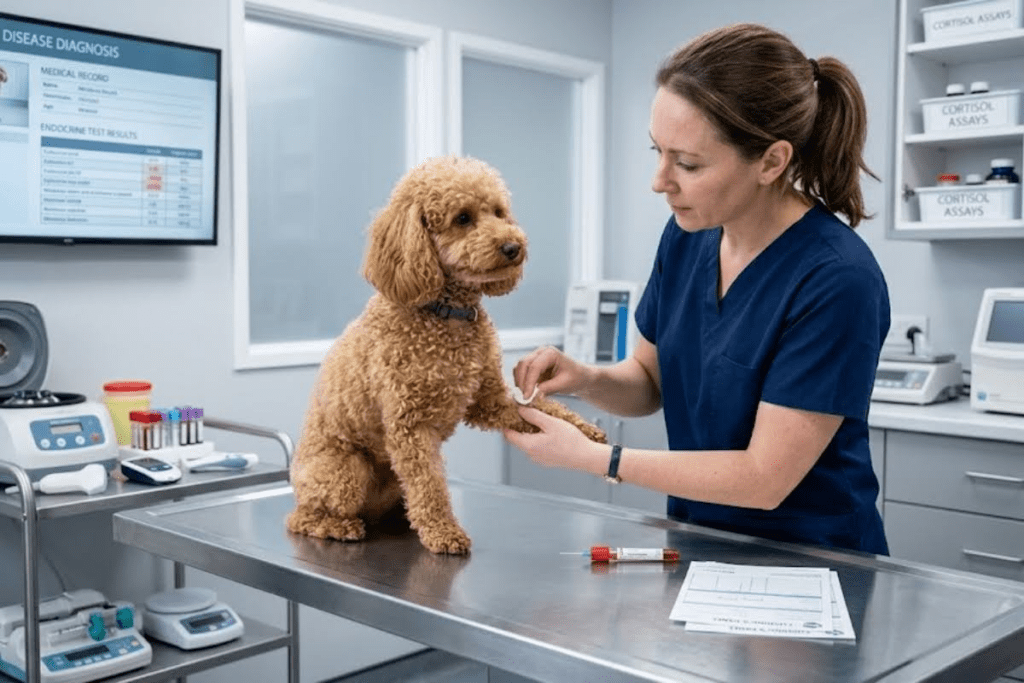
Cushing’s disease in dogs can’t be diagnosed with one single test. Instead, vets start by reviewing your dog’s medical history and symptoms. Then, they run a series of tests to rule out other conditions.
Initial Testing Includes:
- Blood chemistry profile
- CBC (Complete Blood Count)
- Urinalysis
- Fecal exam
If those tests point toward Cushing’s, more specific tests are conducted.
Confirmatory Tests:
- Urine Cortisol-Creatinine Ratio Test: This is often the first test. If cortisol levels are high, more tests are ordered.
- Low-Dose Dexamethasone Suppression Test: A small dose of dexamethasone is injected. Blood samples are taken at 4 and 8 hours. Dogs with Cushing’s won’t suppress cortisol properly.
- ACTH Stimulation Test: Checks how the adrenal glands respond to stimulation.
- Abdominal Ultrasound or Chest X-rays: These help identify adrenal tumors or spread.
No single test guarantees a diagnosis. That’s why a combination of lab results and symptoms is used to confirm the condition.
The Two Types of Cushing’s Disease
1. Pituitary-Dependent Cushing’s Disease
This is the most common form. It happens when a benign tumor on the pituitary gland causes overproduction of ACTH, which in turn triggers too much cortisol.
2. Adrenal-Dependent Cushing’s Disease
Less common but more serious. It’s caused by a tumor on one or both adrenal glands. Surgery may remove the tumor, but not all dogs are candidates.
Treatment Options: Managing the Condition
Cushing’s disease in dogs doesn’t usually have a permanent cure—especially the pituitary form—but it can be managed.
Medications:
- Vetoryl (Trilostane): FDA-approved for both types. Not suitable for dogs with liver or kidney disease.
- Anipryl (Selegiline): Approved only for pituitary-dependent cases.
- Lysodren (Mitotane): Chemotherapy drug used in adrenal-dependent cases. Requires close monitoring due to side effects.
Surgery:
In adrenal-dependent cases, if the tumor hasn’t spread and your dog is a good surgical candidate, surgery may cure the disease. However, the procedure is complex and not always recommended.Your vet will guide you in choosing the right treatment based on the dog’s age, overall health, and test results.
Which Dogs Are Most at Risk?
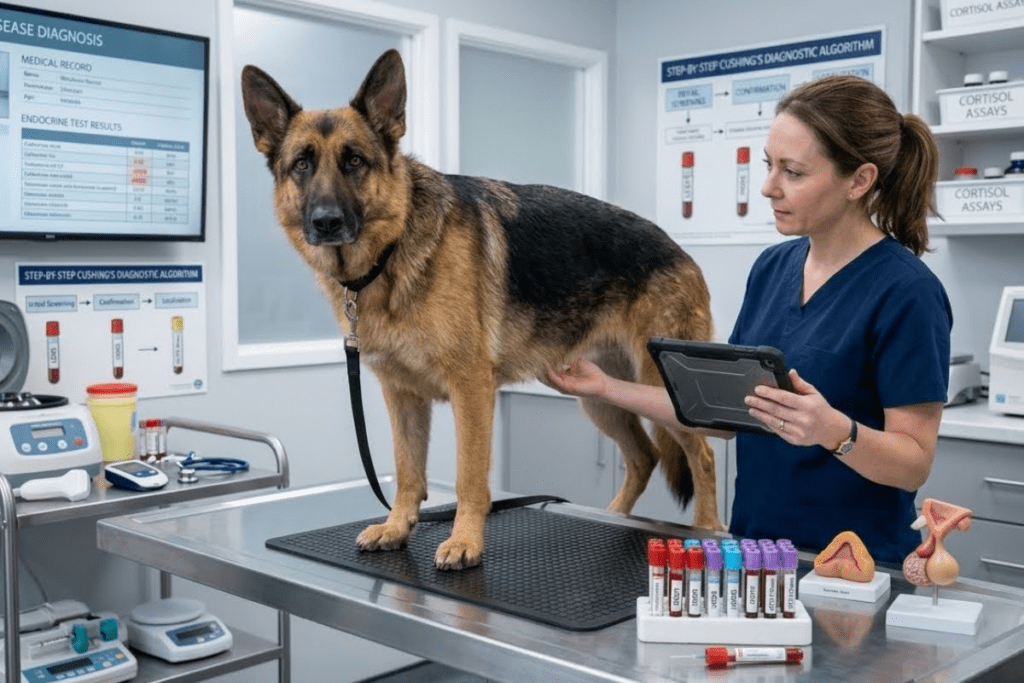
While any dog can develop Cushing’s, certain breeds are more prone to the condition. Dogs aged six and older are at a higher risk. Breeds with the highest incidence include:
- Dachshunds
- Terriers (Yorkshire, Boston, Jack Russell, etc.)
- Poodles (Toy, Miniature, Standard)
- Boxers
- Beagles
- Labrador Retrievers
- Cocker Spaniels
- German Shepherds
- Australian Shepherds
- Maltese
- American Eskimo Dogs
Monitor these breeds closely, especially in middle and senior years dogs.
Cushing’s Disease in Dogs – Is Your Pet at Risk?
Changes in thirst, appetite, and urination habits are often early indicators. If your dog is panting more than usual, gaining weight with a pot-bellied appearance, or having nighttime accidents, don’t wait.Hyperadrenocorticism in dogs can cause significant harm if left untreated. Early detection and proper treatment can improve quality of life and extend your dog’s lifespan.
Conclusion
Cushing’s disease in dogs is a serious condition, but it can be managed with timely intervention. Early detection is key. Know the signs—especially if your dog is part of a high-risk breed or showing sudden behavior or appearance changes. Work closely with your veterinarian to develop a treatment plan that supports your dog’s long-term health. With proper care, dogs with Cushing’s can still lead happy lives.
Think your dog might be at risk? Don’t wait—talk to your vet today about Cushing’s disease in dogs and take the first step toward protecting your pet’s health.
Cushing’s Disease in Dogs: Signs Your Pet May Be at Risk Frequently Asked Questions
1. Can hyperadrenocorticism in dogs be fatal?
If left untreated, it can lead to severe complications and even become life-threatening. Early treatment reduces the risk of serious health issues.
2. How is hyperadrenocorticism in dogs managed long term?
With daily medication, regular vet visits, and blood tests to monitor hormone levels. Most dogs can live comfortably with consistent treatment.
3. Is there a cure for hyperadrenocorticism in dogs?
Surgery may cure adrenal-dependent cases. Pituitary-dependent types are usually managed with medication for life.
4. How much does treatment for hyperadrenocorticism in dogs cost?
Costs vary depending on the treatment type. Medication can cost $50–$200/month. Surgery or diagnostics can be significantly higher.
5. Can younger dogs get Cushing’s disease?
It’s rare but possible. Most cases occur in dogs over six years old. Always report unusual symptoms to your vet, regardless of age.