
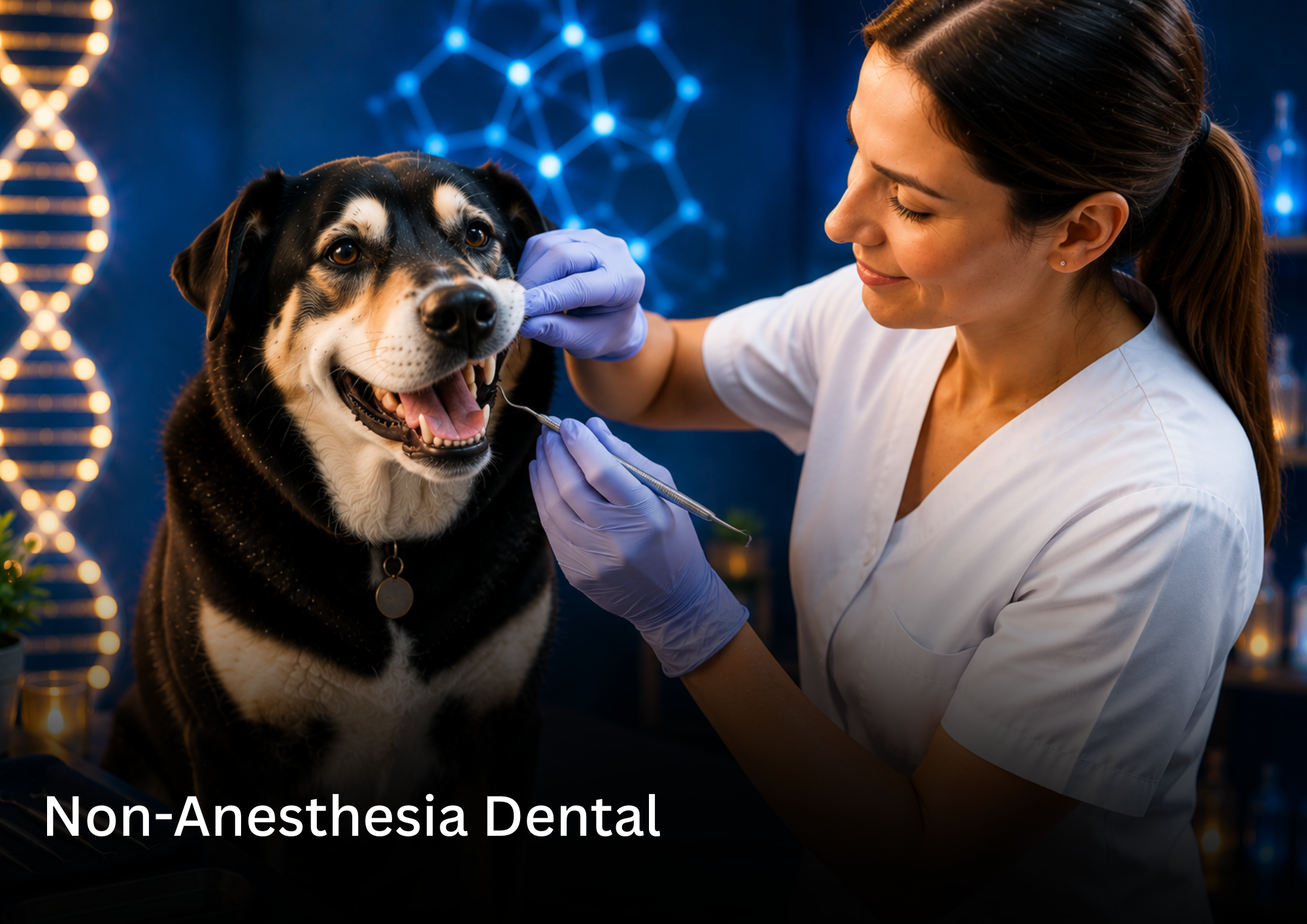
Anesthesia-Free Dental Cleaning
A gentle, awake-dog dental cleaning for routine surface maintenance — offered in person at our West Palm Beach location, and shared here as part of Vitailix's commitment to being the trusted resource on canine biohacking and holistic dog health.
What It Is
Anesthesia-free dental cleaning (also called NAD, or non-anesthetic dentistry) is performed on a fully awake, cooperative dog by a specially trained dental technician using hand instruments. There's no sedation, no IV catheter, and no monitoring equipment — just a calm dog and careful, patient technique.
It's built for accessibility: a shorter appointment, a lower price point, and no anesthesia-related risk or recovery time. For a dog with a healthy mouth who just needs regular upkeep, that combination is genuinely valuable.
We want to be upfront about something important: this is a maintenance service, not a diagnostic or treatment one. A well-trained provider will always be honest with you about the difference — that honesty is part of what good care looks like.
What It Helps With
- Visible plaque on the crown of the tooth
- Surface tartar buildup above the gumline
- Light staining and cosmetic buildup
- General upkeep between more thorough veterinary dental visits
What it's not built to do: reach or treat anything happening beneath the gumline — which, unfortunately, is where most serious dental disease actually lives. A non-anesthetic cleaning cannot include subgingival scaling, dental X-rays, extractions or treatment of a painful/ infected/ fractured tooth, or a full unrestricted exam of every surface. A dog can have a beautifully polished set of visible teeth and still be sitting on an active infection underneath — that's exactly why this is a maintenance tool, not a substitute for veterinary dental care.
What to Expect
In West Palm Beach: Vitailix offers anesthesia-free dental cleanings in person, performed by our specially trained dental technicians.
Not local? This guide reflects the same standard of care we hold our own appointments to, so you know what a responsible provider looks like wherever you go.
Before any instrument touches a tooth: our technicians perform a hands-on oral screening, checking for gum recession, loose or mobile teeth, deep pocketing, fractured teeth, heavy tartar suggesting subgingival disease, oral masses, or anything that looks painful or infected.
If that screening turns up something concerning, the technician stops. We will not proceed with a cosmetic cleaning over a mouth that has real disease — doing so could mask a problem, cause discomfort,
or give false reassurance that everything is fine. Instead, we'll tell you directly what we saw and recommend a full evaluation with your veterinarian or a veterinary dental specialist before any cleaning continues. That referral moment is the technician doing their job well — not a sales pitch, and not something to be talked out of.
Which one does your dog need? Choose anesthesia-free cleaning when your dog has had a recent veterinary oral exam showing no periodontal disease, is calm and cooperative, and just needs routine
surface maintenance. Choose a full veterinary dental under anesthesia when your dog shows any signs of gum disease, persistent bad breath, visible pain or behavior changes, hasn't had a professional cleaning in
over a year, or falls into a breed/age/health profile where subgingival disease is likely even if the front teeth look fine. If you're not sure which category your dog falls into, a veterinary oral exam is the right
place to start either way.
A note on anesthesia hesitation: modern veterinary anesthesia protocols are individualized — your vet factors in age, breed, health history, current medications, and bloodwork before recommending a plan. For a dog who genuinely needs subgingival treatment, a well-managed anesthetic procedure is safer than repeatedly avoiding necessary care.
Breed-Specific Notes
Dental risk isn't distributed evenly across breeds:
- Small & toy breeds (Yorkshire Terrier, Chihuahua, Dachshund, and similar) - tend to have proportionally larger teeth crowded into smaller jaws, raising the risk of plaque buildup, crowding-related gum disease, and retained baby teeth
- Brachycephalic breeds (French Bulldog, Pug) - often deal with dental crowding for similar structural reasons.
If your dog falls into one of these groups, lean toward more frequent veterinary oral exams — anesthesia-free cleaning can still be part of the routine, but it shouldn't be the only thing standing between your dog and a real dental evaluation.
Warning Signs That Mean You Need a Veterinary Dental, Not a Cleaning
Dogs are experts at hiding oral pain — a dog can have a fractured tooth or an abscess and still eat normally. Watch for:
- Persistent bad breath
- Red, swollen, or bleeding gums
- Increased drooling
- Pawing at the face or mouth
- Chewing only on one side, or dropping food while eating
- Less interest in kibble, toys, or treats
- Loose, broken, discolored, or missing teeth
- Swelling near the muzzle, jaw, or under an eye
Any of these mean it's time for a veterinarian, not another surface cleaning — and if our technician sees these signs first, that's exactly what we'll tell you too.
The Best Prevention Is Daily, Not Occasional
Brush regularly- daily is ideal; several times a week still makes a real difference. Use a soft dog toothbrush or finger brush with toothpaste made specifically for dogs — never human toothpaste.
Choose products with real evidence behind them - look for the VOHC (Veterinary Oral Health Council) seal on dental chews, diets, and water additives. Skip extremely hard chews like antlers, real bones, hooves, or hard nylon toys, which can fracture teeth.
Keep up with veterinary exams - a vet can catch gum inflammation, crowding, fractured teeth, retained baby teeth, and oral masses early, while they're still simple and inexpensive to treat.
In West Palm Beach? Book your dog's anesthesia-free dental cleaning.
Not local? Get in touch — we're happy to help you understand what to look for in a qualified provider near you and answer any questions along the way.
Frequently Asked Questions
Is anesthesia-free cleaning as effective as a full dental?
It’s excellent for maintenance and early-stage buildup, but cannot replace a full anesthetic dental for advanced disease
Will my dog be stressed during the cleaning?
Most dogs tolerate it calmly; a gentle, patient approach is used throughout
How often should this be done?
Every 6-12 months for most dogs, depending on individual dental health