Is your dog constantly on high alert? Whether it’s pacing during a thunderstorm, barking at every leaf that hits the window, or simply being unable to settle after a walk, many owners face the same frustration. We often label these behaviors as "personality quirks." However, in the world of functional medicine and canine biohacking, we …

Is your dog constantly on high alert? Whether it’s pacing during a thunderstorm, barking at every leaf that hits the window, or simply being unable to settle after a walk, many owners face the same frustration.
We often label these behaviors as “personality quirks.” However, in the world of functional medicine and canine biohacking, we look deeper. We look at the brain chemistry.
One of the most critical components of a balanced canine nervous system is GABA. Understanding how GABA for dogs works is the difference between simply managing a reactive pet and truly optimizing their long-term neurological health.
What Exactly is GABA? (And Why It Isn’t Gabapentin)
Before we dive into the benefits, we must clear up a common piece of misinformation. Many pet owners—and even some traditional veterinary blogs—confuse GABA with Gabapentin.
The Natural vs. The Synthetic
- GABA ($gamma$-Aminobutyric Acid): This is a naturally occurring amino acid that acts as an inhibitory neurotransmitter. Your dog’s body produces it to signal the nervous system to “slow down.” It is a nutraceutical.
- Gabapentin: This is a synthetic pharmaceutical drug. While it mimics some effects of GABA and is used for nerve pain or seizures, it is a chemical intervention with a different metabolic footprint and potential side effects.
At Vitailix, our focus is on functional wellness. We prioritize the body’s natural pathways. Using GABA for dogs as a supplement aims to support the brain’s internal “braking system” without the heavy sedation often associated with prescription drugs.
Summary Table for Quick Reference
| Feature | Details |
| What it is | A natural inhibitory neurotransmitter/amino acid. |
| Primary Goal | To calm the central nervous system and reduce excitability. |
| Best For | Anxiety, phobias, poor sleep, and senior cognitive support. |
| Key Difference | GABA is a natural nutraceutical; Gabapentin is a synthetic drug. |
| How to Use | Best paired with Magnesium or B6 for maximum absorption. |
The Science of the “Brake Pedal”
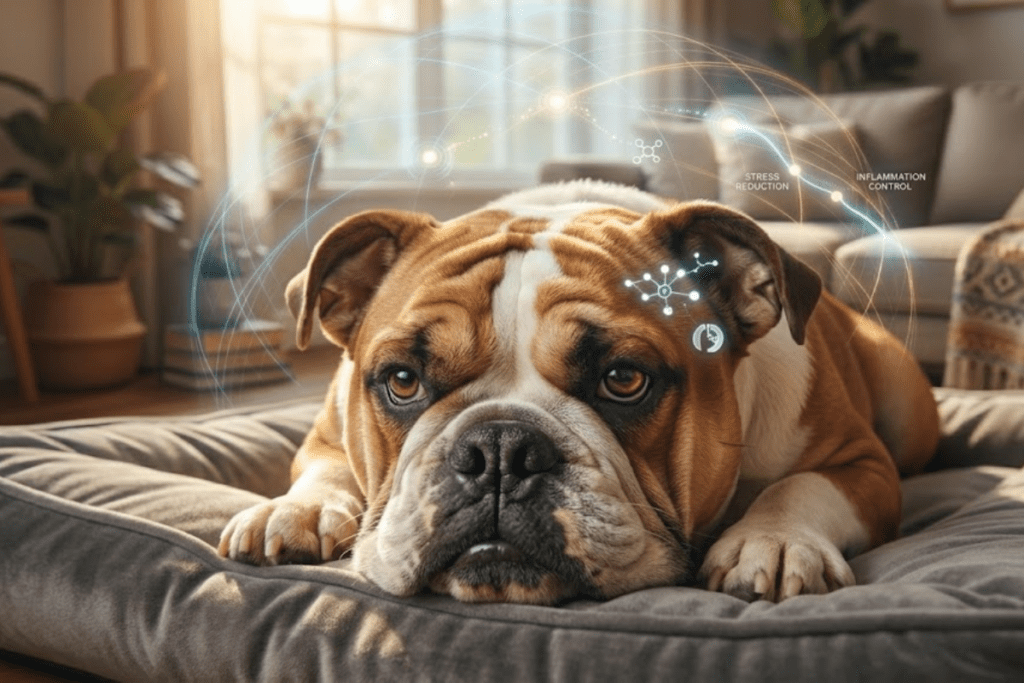
To understand why your dog needs GABA, you have to understand its counterpart: Glutamate. Think of Glutamate as the “gas pedal.” It excites the brain, helps with learning, and keeps your dog alert. In a healthy dog, Glutamate and GABA exist in a delicate dance. One revs the engine; the other applies the brakes.
When a dog suffers from chronic stress, poor nutrition, or environmental toxins, this balance shifts. The “gas pedal” gets stuck. This leads to:
- Systemic inflammation.
- Adrenal fatigue.
- Neurological “burnout.”
By introducing supplemental GABA for dogs, we are effectively helping the brain regain its ability to apply the brakes.
Key Benefits of GABA for Dogs
1. Modulating Anxiety and Fear Responses
This is the most common reason owners seek out GABA. Whether it is separation anxiety or noise phobias, GABA helps dampen the “glutamate storm” that happens during a panic attack. It allows the dog to remain conscious and present but less reactive to external triggers.
2. Enhancing Sleep Quality and Recovery
Just like humans, dogs need deep REM sleep to repair tissues and process memories. High-strung dogs often sleep “light,” jumping up at the slightest sound. GABA supports the transition into deep sleep, which is where true biological repair happens.
3. Cognitive Support for Senior Dogs
Canine Cognitive Dysfunction (CCD), often called “dog dementia,” is a heartbreaking reality for many senior pets. Research suggests that maintaining healthy GABA levels can help regulate sleep-wake cycles in seniors and reduce nighttime wandering or vocalization.
4. Improving Focus and Trainability
It sounds counterintuitive, but a calmer dog learns faster. When a dog is over-excited, their “prefrontal cortex” (the logical part of the brain) shuts down. GABA keeps them in a state of “alert calm,” making them more receptive to cues and training.
The Biohacker’s Approach: Sourcing and Bioavailability
Not all GABA supplements are created equal. If you buy a cheap, synthetic GABA powder from a big-box retailer, you may see zero results.
Crossing the Blood-Brain Barrier
The biggest challenge with GABA is bioavailability. The molecules are often too large to cross the blood-brain barrier effectively on their own. To optimize this, functional medicine experts look for:
- PharmaGABA®: A natural form produced via fermentation (often using Lactobacillus hilgardii). It is more effectively absorbed than synthetic versions.
- Synergistic Co-factors: GABA works better when paired with Magnesium, L-Theanine, or Vitamin B6. These nutrients help transport the GABA and support the dog’s natural production.
Identifying the “GABA Gap” in Your Dog
How do you know if your dog is actually low in GABA? At Vitailix, we don’t believe in guessing; we believe in testing. However, there are physical and behavioral signs that suggest a neurochemical imbalance:
- Hyper-Vigilance: The dog cannot rest even in a safe environment.
- Muscle Tension: A “stiff” gait or constant twitching during rest.
- Digestive Issues: The “gut-brain axis” is real. Stress-induced diarrhea is often a sign of low inhibitory neurotransmitters.
- Poor Impulse Control: Nipping, jumping, or inability to wait for food.
Case Study: The “Burned Out” Rescue
Think of a rescue dog, “Cooper,” who spent years in a loud shelter. His nervous system is “fried.” He is in a constant state of fight-or-flight. Traditional vets might prescribe heavy sedatives. A functional approach involves testing Cooper’s cortisol and neurotransmitter metabolites, then using a targeted GABA for dogs protocol to gently retrain his brain to feel safe again.
Potential Side Effects and Safety
Because GABA is a natural amino acid, it is generally very safe. However, biohacking is about precision.
- Dosage Matters: Too much can cause temporary lethargy or digestive upset.
- Drug Interactions: If your dog is already on SSRIs or Gabapentin, you must consult a professional before adding GABA.
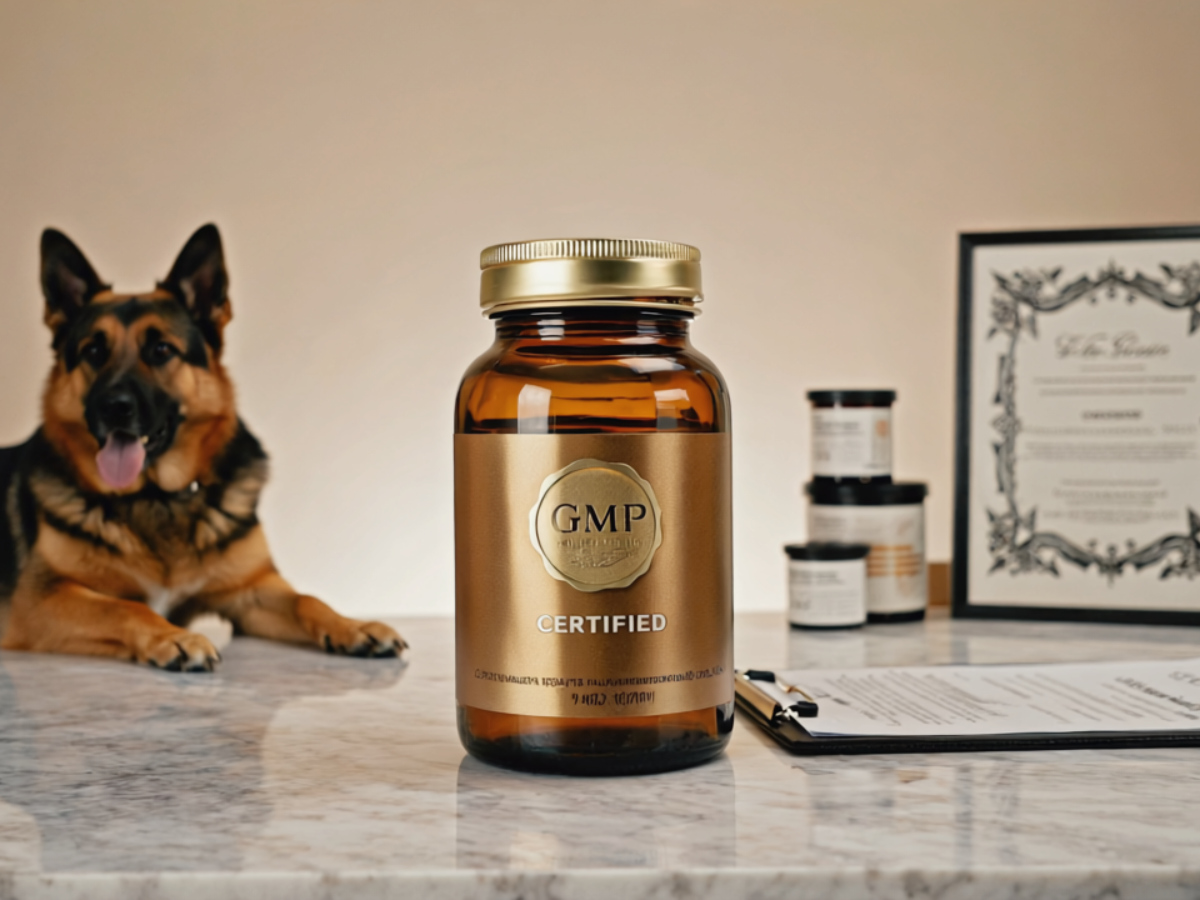
- Quality Control: Ensure the product is free from xylitol (a common sweetener that is toxic to dogs) and heavy metal contaminants.
Integrating GABA into a Longevity Strategy
At Vitailix, we see GABA as one tool in a much larger toolkit. Longevity isn’t just about living a long time; it’s about healthspan. A dog that lives to 15 but spends 10 of those years in a state of high anxiety isn’t truly thriving.
By stabilizing neurochemistry, we reduce the oxidative stress on the heart and the immune system. This is true disease prevention.
The Vitailix Protocol for Calm:
- Functional Lab Testing: Identify the root cause of the anxiety.
- Personalized Nutrition: Remove inflammatory grains that mess with gut-produced neurotransmitters.
- Targeted Supplementation: Use high-bioavailability GABA and L-Theanine.
- Wearable Monitoring: Track your dog’s resting heart rate to see the biological impact of the protocol.
Conclusion: Give Your Dog the Gift of Peace
Your dog’s behavior isn’t just “how they are.” It is a reflection of their internal biology. If their brain is screaming for balance, no amount of training will stick until you address the neurochemical foundation.
GABA for dogs is a powerful, natural way to support a peaceful, focused, and healthy life. Whether you are dealing with a fearful puppy or a confused senior, optimizing their neurotransmitters is a key step in their longevity journey.
Do you actually want to transform your dog’s health?
Don’t settle for “fine.” At Vitailix, we help you unlock your dog’s full potential through science-backed, personalized wellness plans.
[Schedule a Free Consultation Today] and let’s find the root cause of your dog’s restlessness together.
Frequently Asked Questions About GABA for Dogs
1. Will GABA make my dog sleepy or sedated?
Unlike heavy pharmaceutical sedatives, natural GABA is designed to promote relaxation, not unconsciousness. At the correct dosage, your dog should feel “alert but calm.” They will still be able to play and go for walks, but their “reactivity” to triggers like doorbells or cars will be significantly lowered.
2. How long does it take for GABA to start working in dogs?
The effects of GABA can vary depending on the delivery method. For acute stress (like fireworks), some highly bioavailable forms can show effects within 30 to 60 minutes. However, for chronic anxiety or cognitive support, it may take 2 to 4 weeks of consistent supplementation to see a baseline shift in your dog’s temperament.
3. Can I give my dog human GABA supplements?
While the GABA molecule itself is the same, we strongly advise against using human supplements without professional guidance. Many human “calming” gummies or capsules contain Xylitol (birch sugar), which is highly toxic to dogs even in small amounts. Additionally, human dosages are not calibrated for a dog’s metabolic rate.
4. Is GABA the same thing as Gabapentin?
No. This is a common point of confusion. GABA is a natural amino acid and neurotransmitter found in the body. Gabapentin is a synthetic prescription medication. While they both involve the nervous system, GABA is used as a proactive nutraceutical for wellness, whereas Gabapentin is a drug used for clinical pain and seizure management.
5. Can a dog overdose on GABA?
GABA is water-soluble, meaning the body generally excretes what it cannot use. However, an extremely high dose can lead to temporary lethargy, panting, or digestive upset. It is always best to start with a “load dose” based on functional testing to find your dog’s specific “sweet spot.”