A limp after a fun run, a slow rise after a short nap, a late‑night whimper that tugs at your heart—each scene tells you your dog hurts. You want help fast, yet you do not want harsh drugs or risky surgery. Extracorporeal Shockwave Therapy—often called shockwave therapy—offers a gentle answer. It sends focused sound energy …

A limp after a fun run, a slow rise after a short nap, a late‑night whimper that tugs at your heart—each scene tells you your dog hurts. You want help fast, yet you do not want harsh drugs or risky surgery. Extracorporeal Shockwave Therapy—often called shockwave therapy—offers a gentle answer. It sends focused sound energy from outside the body to the sore spot inside. The waves wake up healing cells, ease pain, and restore free movement. Below, you will discover what ESWT for dogs is, how it heals, which problems it treats, and why Vitailix stands out for kind, expert care. Every section is clear, short, and written for easy reading. Let’s begin.
What Is Extracorporeal Shockwave Therapy?
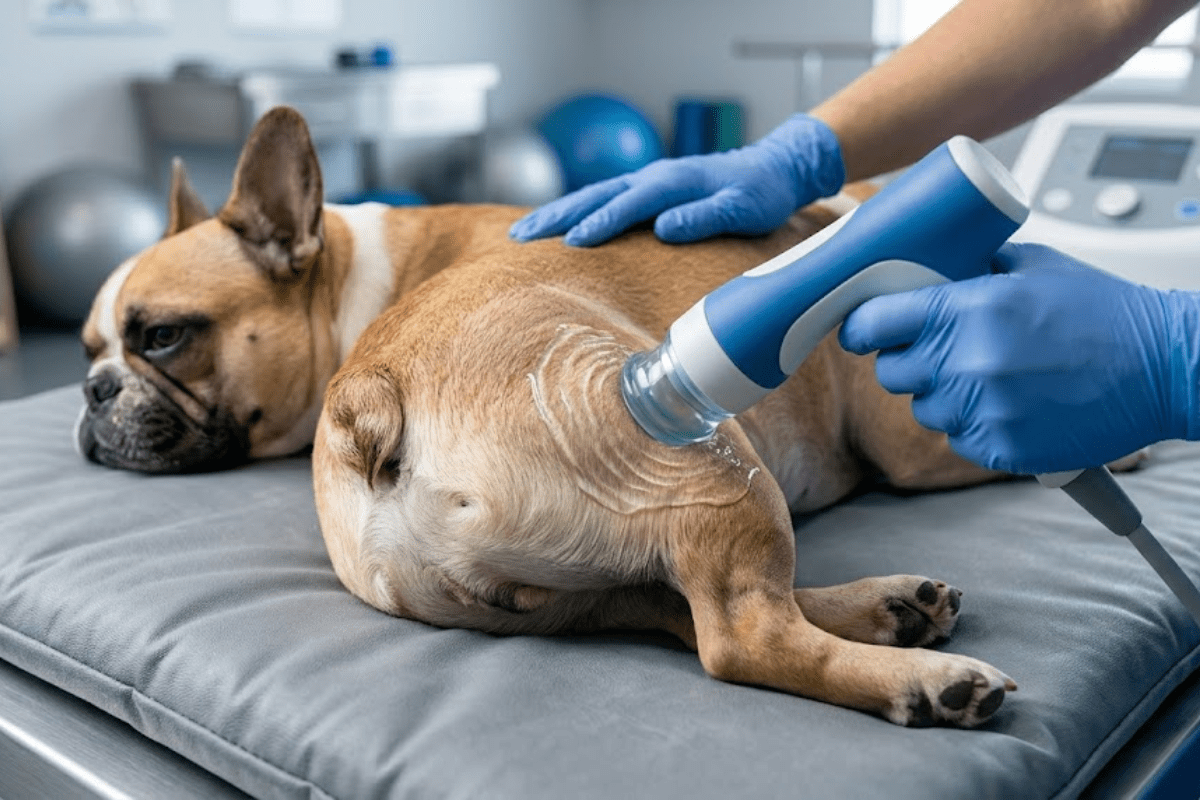
“Extracorporeal” means outside the body. “Shockwave” is a quick burst of sound energy. A special machine makes those waves. A small handpiece aims them at the injury. They glide through skin and muscle without harm, landing right where healing must start.
How the Technology Works
Inside the machine, air or electromagnetic force builds high pressure in a tiny chamber. When the pressure suddenly releases, it creates a rapid, powerful wave. Cool gel on the skin lets the wave travel without losing power. Once inside the body, the wave slows, spreads out, and shares its energy with tired cells that crave a fresh spark.
Ultrasound uses mild sound to warm tissue. Laser uses light to soothe surface layers. Shockwave therapy is stronger and deeper. It can reach the parts other tools miss. It even tells bone cells to grow again, something a light and gentle sound cannot do.
The Science Behind the Healing
Pain Gate Theory
Pain signals travel fast along nerves to the brain. That’s how your dog knows something hurts. But shockwaves change that. When the waves hit the sore area, they flood it with harmless, non-pain signals. These safe signals rush in and crowd out the pain messages. The brain gets so many of the new signals, it stops “hearing” the pain. It’s like turning down the volume on an alarm. Your dog still moves, but now with less discomfort. This lets muscles relax, joints move more easily, and healing begins faster.
Tiny Bubbles, Big Change
Shockwaves move through the fluid that surrounds each cell. As they pass, they create tiny bubbles—so small you can’t see them. These bubbles grow and pop quickly. When they burst, they gently pull and stretch the nearby cell walls. That little tug acts like an on-switch inside the cell. It wakes up the repair genes and tells the body, “Time to fix this.” In just minutes, sleepy cells shift into repair mode. They begin to clean up damage, rebuild tissue, and grow strong again.
More Blood, Faster Repair
Each shockwave burst also tells small blood vessels to open wider or grow new branches. This brings fresh, oxygen-rich blood to the sore spot. That fresh blood carries nutrients and growth factors—tiny helpers that rebuild bone, tendon, and muscle. It also washes away waste, swelling, and dead cells. This cleanup makes space for new, healthy tissue. The healing doesn’t drag on—it moves fast, like a sprinter off the line. The result is a cleaner, quicker, and stronger recovery for your dog.
Conditions That Respond Well to Shockwave Therapy
Joint Problems
Dogs with hip dysplasia, elbow trouble, or creaky knees often step more easily after a short shockwave plan. The ESWT for dogs trims joint swelling, breaks up mineral grit, and calms fired‑up nerves that scream during movement.
Soft‑Tissue Injuries
Torn ligaments, sore tendons, and tight muscles need order. Shockwaves line up collagen fibers so they grow straight and strong, not messy and weak. As fibers realign, the limb regains power and smooth motion.
Slow‑Healing Bones
Some fractures stall. They form scar tissue called a non‑union. Shockwaves jolt bone ends, call in fresh bone‑building cells, and close the gap. That extra push often ends months of limping.
Tough Skin Sores and Wounds
When circulation is poor, a cut stays open. Sound waves boost local blood flow and spark new vessel growth. As more red cells arrive, skin edges knit together faster and thickly.
Chronic Back Pain
Small spinal joints can ache for years. Shockwave therapy reaches between stubborn muscles to soothe those joints. Many long‑suffering dogs stand taller after only two treatments.
Life‑Changing Benefits
Pain keeps dogs still. They avoid stairs, skip playtime, and rest more than they should. But once pain fades, they begin to move freely again. Most dogs show smoother, easier steps within just a few days of starting treatment. Their limp softens. Their back straightens. Soon, they’re hopping on the couch again, asking for walks, and bringing you their favorite toy. Many dogs even sleep through the night without tossing or groaning. Relief helps them return to their old self, or even better.
Stronger Tissues
Healing doesn’t just stop pain—it builds the body back stronger. After a few sessions, tendons begin to thicken, muscles grow more relaxed, and stiff joints loosen up. The shockwaves also help bones rebuild by adding fresh layers of calcium. These new, stronger tissues are better at handling stress, strain, and everyday play. So not only does your dog feel better, but their risk of future injury goes down. It’s like giving their body a fresh coat of armor, made from the inside out.
Happier, Calmer Dogs
Pain changes how dogs act. Some get quiet and withdrawn. Others become restless or snappy. But when the pain fades, their true personality comes back. Eyes brighten. Tails lift. Ears perk up. You might see your dog wag at the door again, greet guests, or even do a happy spin. Many pet parents say they notice the difference the same evening. A dog that felt tired and stiff now feels playful and relaxed. That change brings joy to the whole family.
Your Visit to Vitailix: Step‑By‑Step
First‑Day Evaluation
We start by watching your dog move. We look at how they walk, sit, turn, and lie down. Every step tells us something about where they may hurt. Then, with calm, gentle hands, we press along their muscles and joints to find sore or tight spots. If something seems deeper, we may take low-dose X-rays or do an ultrasound to see inside. These tools help us make sure we’re not guessing—we’re seeing. After that, we build a therapy plan that fits your dog’s exact needs. No two dogs are the same, and their care shouldn’t be either.
Painless Pulse Delivery
Your dog rests on a padded mat in a quiet, cozy room. We may trim a small patch of fur to help the tool touch the skin just right. Cool, soothing gel goes on the spot. Then, we place the handpiece gently on the area. The machine clicks in quick, rhythmic bursts—pop, pop, pop. The sound is firm but not loud, like gentle tapping. Most sessions last about thirty minutes. Many dogs close their eyes, stretch out, or even nap during treatment. The waves don’t hurt—they calm the nerves as they heal.
After‑Care You Can Do at Home
After the first session, keep things simple. For the rest of the day, take only short, calm walks. Avoid jumping, roughhousing, or big stairs. Offer a soft bed in a quiet space, and let your dog rest. On day two, you can start gentle leash walks on soft ground, like grass or carpet. We’ll also show you light stretches and movement games that take just five minutes. These help keep the joints loose and muscles strong between visits. The goal is steady healing, not rushing.
Safety Facts Every Owner Should Know
Some dogs’ skin looks pink for a few hours. A handful feel tender the next morning, similar to a workout ache. These changes fade fast. Serious problems are almost unheard of in trained hands. Our team watches each dog closely during and after the session. We check skin, movement, and comfort to make sure everything goes well. We skip shockwaves over tumors, lungs, or active infections. We wait until the growth plates close in young pups. Pregnant dogs receive gentler care until pups arrive. These rules are based on strong safety research. Your dog’s health always comes first at Vitailix.
Comparing Shockwave Therapy to Other Options
Surgery
Surgery can fix severe damage but needs anesthesia, cuts, and weeks of strict rest. Shockwave therapy needs no cuts, no stitches, and almost no downtime. While not a cure‑all, it often delays—or eliminates—the need for a knife.
Medicines
Pain pills work fast but can upset the stomach or strain the kidneys. Shockwave therapy eases pain without adding daily drugs. Many owners cut doses or switch to milder medicine after treatment.
Other Rehab Tools
Laser calms surface aches. Acupuncture steadies nerve signals. Hydrotherapy builds muscle in warm water. At Vitailix, we blend these with shockwave therapy for full‑circle care that keeps gains quick and lasting.
How Many Sessions Will My Dog Need?
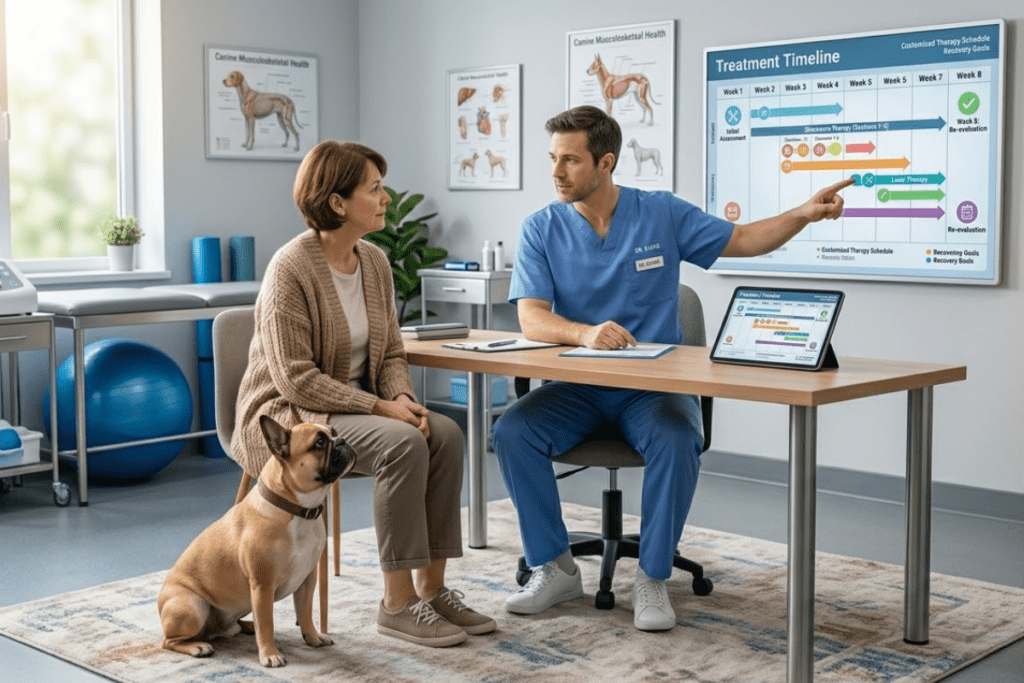
It depends on your dog’s condition. After the checkup, we determine how many sessions will be required for your dog to heal completely.
A Fresh muscle pull:
We usually begin with two sessions, spaced one week apart. This gives the muscle time to respond and heal without overloading it. Most dogs feel better after the first visit and return to light play soon after the second.
Long‑standing arthritis:
For dogs with years of joint pain, we recommend three or four sessions over one month. This helps reduce swelling, boost joint strength, and improve daily movement. Many senior dogs walk more easily and sleep more peacefully by week four.
A stubborn fracture:
Tough, slow-healing breaks often need six sessions spread across eight weeks. The shockwaves help bone cells rebuild and close the gap. Progress may be slow at first, but strong new bone forms steadily with each session.
How We Adjust Along the Way
At every visit, we film your dog’s gait. We test soreness with light pressure. If progress slows, we tweak wave strength, pulse count, or add a helper therapy like underwater treadmill work. The plan bends as your dog’s body mends.
Conclusion:
Pain steals your dog’s joy. But with ESWT for dogs, healing starts fast—no cuts, no drugs, just safe sound waves. It eases pain, speeds healing, and brings back smooth steps and happy tales. Whether it’s an old injury, sore joints, or slow-healing bones, ESWT offers a gentle, proven path to comfort. At Vitailix, we treat every dog with care, using smart tools and kind hands.
Extracorporeal Shockwave Therapy for Dogs Frequently Asked Questions
1. Will my dog feel pain during ESWT for dogs?
No. Most dogs feel light taps, not pain. Many stay calm and relaxed during the session. If your dog is nervous, we may use mild sedation to help them feel safe and still.
2. How soon will I see results after treatment?
Some dogs feel better the same day. Others take a few days. Most pet parents notice clear changes—like smoother walking or deeper sleep—within one to two weeks.
3. Can ESWT take the place of surgery?
Yes, in many mild or early cases, like sprains or arthritis. It may delay or even prevent surgery. But for complete tears or severe damage, surgery may still be needed. We’ll help you choose the safest option.
4. Is ESWT safe for small or toy breeds?
Yes. We adjust the power for each dog’s size and need. Even tiny breeds like Chihuahuas can enjoy safe, gentle care with ESWT.
5. Can senior dogs have this therapy?
Absolutely. Older dogs often benefit the most. ESWT brings relief without stressing the liver or kidneys, which can be sensitive in older pets.
6. Will my pet insurance help with the cost?
Many pet insurance plans cover rehab like ESWT. Bring your policy to your visit. Our team can check the coverage and help you file your claim.
7. How should I prepare my dog for the visit?
Give a calm walk so your dog can go potty. Skip large meals before the session. Bring a favorite blanket or toy to help your dog relax during treatment