For decades, the pet industry has sold a lie: that a brown, processed nugget contains everything a dog needs to thrive for twenty years. But if you are reading this, you know that "surviving" is not the same as "optimizing." At Vitailix, we don't just feed dogs; we program them. Every time your dog eats, …

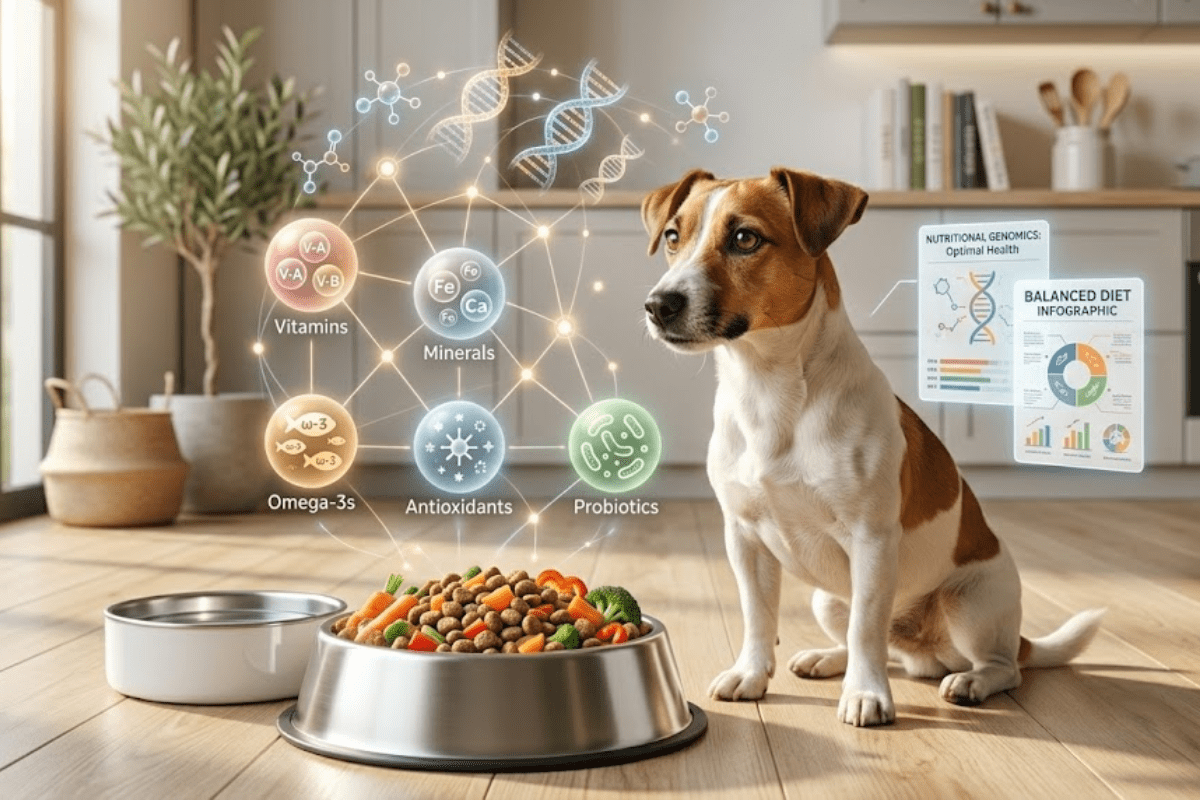
For decades, the pet industry has sold a lie: that a brown, processed nugget contains everything a dog needs to thrive for twenty years. But if you are reading this, you know that “surviving” is not the same as “optimizing.”
At Vitailix, we don’t just feed dogs; we program them.
Every time your dog eats, they are receiving a biological software update. The vitamins, minerals, and phytonutrients in their bowl act as signaling molecules. They tell the body to either turn on inflammatory pathways or activate “survival genes” like SIRT1 and Nrf2.
When we talk about dog diet supplements, we aren’t talking about a generic multivitamin hidden in a piece of cheese. We are talking about the strategic integration of functional whole foods that bridge the gap between commercial convenience and ancestral vitality. This is the art of canine biohacking.
1. The Bioavailability Crisis: Why Synthetic Supplements Fail
The most common mistake owners make is buying synthetic “all-in-one” powders. Most of these use “feed-grade” vitamins, chemically isolated compounds that the canine gut often fails to recognize.
The “First Pass” Metabolism
When a dog consumes a synthetic vitamin, the liver must work overtime to convert it into a usable form. In many cases, the body simply flushes it out. This is why functional medicine prioritizes whole-food matrices.
In a whole food, like a chicken heart or a sprig of parsley, the nutrients are packaged with enzymes and co-factors that tell the dog’s body exactly how to transport that nutrient to the cell.
2. Organ Meats: The Original “Smart” Supplements
In the wild, the “alpha” of the pack doesn’t eat the muscle meat first; they go for the organs. Why? Because organs are the storage units for the most critical micronutrients.
The Liver: The Nutritional Powerhouse
Liver is nature’s most concentrated source of Vitamin A (Retinol), which is essential for vision, immune function, and skin health. It also provides a massive dose of B-vitamins, which drive the metabolic engine.
- Pro Tip: Liver should make up about 5% of a supplemented diet. Too much can lead to Vitamin A toxicity; too little leads to a “GABA gap” and low energy.
The Heart: The CoQ10 Engine
If your dog is a breed prone to cardiac issues (like Boxers or Dobermans), supplementing with raw or lightly seared heart meat is non-negotiable. It is the best source of Coenzyme Q10 and Taurine, which fuel the mitochondria of the heart muscle.
3. Lipid Biohacking: Balancing the Inflammatory Scale
The modern dog is “on fire.” Most commercial diets are loaded with corn, soy, and poultry fat, all of which are high in Omega-6. This creates a state of chronic, low-grade inflammation, the “silent killer” that leads to cancer and arthritis.
Beyond Generic Fish Oil
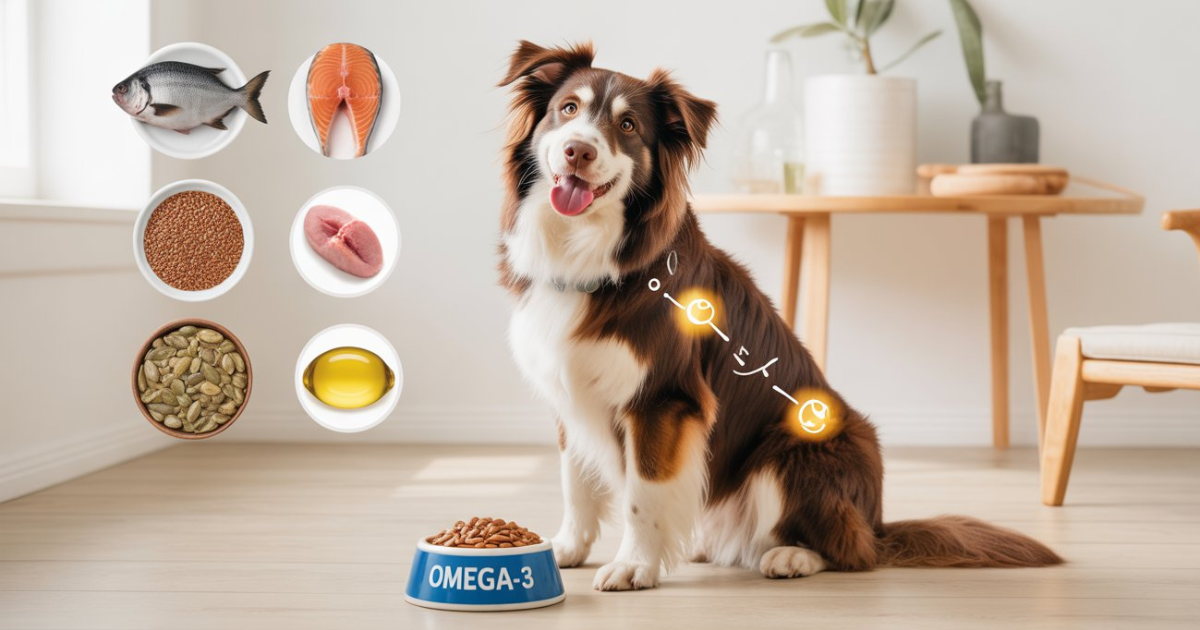
Many owners reach for a pump bottle of salmon oil. However, once that bottle is opened, the oil begins to oxidize. Feeding oxidized (rancid) oil actually increases inflammation.
- The Vitailix Standard: We recommend Small Oily Fish (Sardines, Anchovies) or Phytoplankton.
- Phytoplankton is the Earth’s original source of Omega-3. It bypasses the fish entirely, meaning there is zero mercury risk and 100% bioavailability. It is a cellular-level supplement that supports the brain’s “grey matter” and retinal health.
4. The “Hormetic” Power of Plants
Dogs are facultative carnivores, meaning they can survive on meat alone, but they thrive when they consume specific plant secondary metabolites. This is called Hormesis, a small amount of “stress” from a plant that makes the dog’s cells stronger.
Sulforaphane: The Cancer-Fighter
Cruciferous vegetables like broccoli sprouts contain a compound called glucoraphanin. When chewed or chopped, it turns into Sulforaphane.
- The Benefit: It triggers the Nrf2 pathway, which is the body’s strongest internal antioxidant producer.
- Biohacking Tip: You must “freeze and crush” or “lightly steam” these vegetables. Dogs lack the enzymes to break down cellulose. Without this step, the “supplement” just passes through undigested.
Quercetin: The “Nature’s Benadryl”
Does your dog have seasonal allergies? Instead of reaching for pharmaceuticals, supplement the diet with Quercetin-rich foods like blueberries or unpeeled apples (no seeds). Quercetin stabilizes mast cells, preventing them from releasing the histamine that causes itching.
5. Functional Mycology: The Immune System’s “Software”
If you want dog diet supplements for longevity, you must look to the fungal kingdom. Mushrooms contain Beta-Glucans, which act as “training protocols” for the immune system.
- Turkey Tail: Rich in Polysaccharide-K (PSK), it is so powerful that it is studied globally for its ability to fight canine hemangiosarcoma.
- Lion’s Mane: This is the ultimate “Brain Supplement.” It stimulates Nerve Growth Factor (NGF), helping to repair damaged nerves and keep senior dogs from developing “brain fog.”
- Reishi: The “Master Guard” mushroom. It helps lower blood pressure and acts as a natural antihistamine.
6. The Microbiome: Supplementing the “Second Brain”
You are not just feeding a dog; you are feeding a colony of trillions of bacteria. If the gut microbiome is out of balance, your dog’s diet supplements won’t matter because the body can’t absorb them.
The Power of “Living” Toppers
- Raw Goat Milk: Contains over 200 species of probiotics and is much easier for dogs to digest than cow’s milk. It’s an “electrolyte-rich” supplement that heals “leaky gut.”
- Fermented Raw Kelp: Kelp provides 60 different trace minerals. When fermented, these minerals become “chelated,” meaning they are pre-digested and ready for immediate absorption into the bloodstream.
7. Bone Broth: The Collagen Glue
As dogs age, their “connective tissue” begins to degrade. This leads to sagging joints and “leaky gut” syndrome.
- The Supplement: Slow-simmered bone broth (with apple cider vinegar to pull out the minerals).
- Why it works: It is packed with Glycine, an amino acid that supports liver detoxification and repairs the gut lining. It also provides a bioavailable form of collagen that acts as the “glue” for your dog’s joints.
8. Identifying Nutrient Gaps: The Vitailix Method
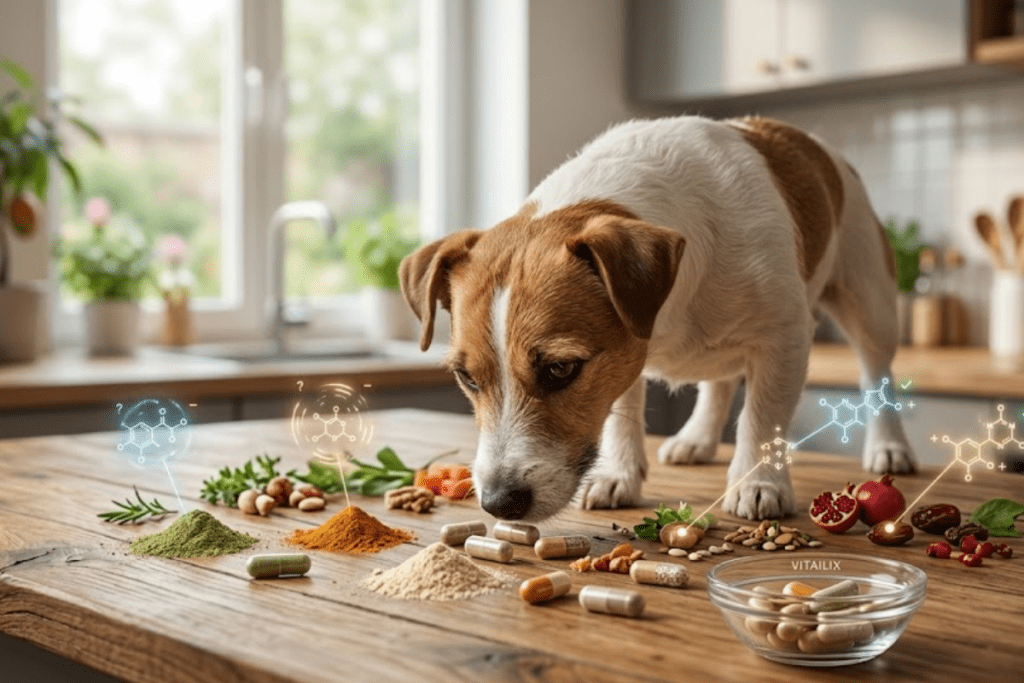
Blindly adding supplements to a bowl is “guesswork.” At Vitailix, we believe in Precision Nutrition.
A Golden Retriever has different metabolic requirements than a French Bulldog. A high-performance agility dog requires different “fuel” than a senior couch-dweller.
- Metabolic Testing: We analyze blood and hair samples to find specific deficiencies.
- The Danger of Over-Supplementation: Too much Vitamin D can lead to kidney stones. Too much Calcium in a growing puppy can cause skeletal deformities. This is why data-driven diet plans are essential.
Turning the Bowl into a Pharmacy
Dog diet supplements are not a “weekend project.” It is a lifestyle shift. By moving away from synthetic pills and toward functional whole foods, you are honoring your dog’s biological heritage while utilizing modern nutritional science.
Your dog doesn’t have a voice to tell you they feel “sluggish” or “inflamed.” They show you through their energy, their coat, and their longevity.
[Schedule a Consultation with Vitailix] today. Let’s stop guessing and start building a precision-engineered diet that adds years to your dog’s life and life to your dog’s years.
Frequently Asked Questions (FAQ)
Can I use dog diet supplements if I feed kibble?
Absolutely. In fact, “kibble boosting” is the most important thing a dry-food feeder can do. Adding “living” foods like raw eggs, sardines, or fermented goat milk can mitigate some of the inflammatory effects of highly processed starch.
Is a raw diet enough, or do I still need supplements?
Even a raw diet can have gaps. Soil depletion means that modern meats and vegetables often have lower mineral counts than they did 50 years ago. Targeted supplementation, especially with trace minerals and Omega-3s, is still usually necessary.
What is the best supplement for a dog with “itchy paws”?
Itchy paws are often a sign of yeast overgrowth or allergies. Supplementing with Quercetin (blueberries) and Apple Cider Vinegar (added to water) can help balance the skin’s pH and reduce the histamine response.
How do I know if the supplements are actually working?
Look for the “Big Three”: Skin/Coat (should be shiny and soft), Energy (should be consistent, not frantic), and Stool Quality (should be small, firm, and easy to pass). For a deeper look, a Vitailix follow-up lab panel can show the cellular changes.