
History of the Bernese Mountain Dog The Bernese Mountain Dog, known for its striking tri-colored coat and gentle temperament, hails from the Swiss Alps, specifically the canton of Bern. One of four Swiss Mountain Dog breeds, alongside the Appenzeller, Entlebucher, and Greater Swiss Mountain Dog, the Bernese was originally bred as a versatile farm dog. …

History of the Bernese Mountain Dog
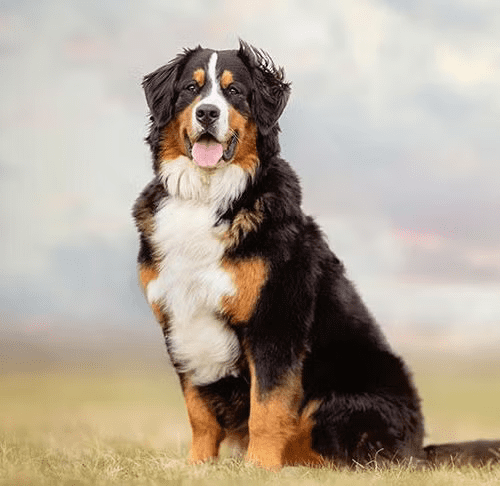
The Bernese Mountain Dog, known for its striking tri-colored coat and gentle temperament, hails from the Swiss Alps, specifically the canton of Bern. One of four Swiss Mountain Dog breeds, alongside the Appenzeller, Entlebucher, and Greater Swiss Mountain Dog, the Bernese was originally bred as a versatile farm dog. Its ancestors, likely brought to Switzerland by Roman soldiers over 2,000 years ago, were crossed with local mastiff-type dogs to create a robust worker suited for the rugged alpine terrain.
By the 19th century, Bernese Mountain Dogs were indispensable on Swiss farms, used for herding cattle, pulling carts of milk and cheese to market, and guarding properties. Their strength, calm demeanor, and ability to withstand harsh winters made them ideal for these tasks. However, industrialization in the late 19th century reduced demand for working dogs, and the breed’s numbers dwindled.
In the early 20th century, dedicated breeders, including Franz Schertenleib and Albert Heim, worked to preserve the Bernese Mountain Dog, standardizing its appearance and temperament. The breed was officially recognized by the Swiss Kennel Club in 1907 and later by the American Kennel Club in 1937. Today, the Bernese Mountain Dog is cherished as a loyal family companion, though its working heritage remains evident in its strength and versatility.